Healthcare is not a luxury—it is a fundamental human right. Yet for millions of people across the globe, access to quality healthcare remains out of reach. For diaspora communities, the barriers are often multiplied: language difficulties, cultural misunderstandings, financial discrimination, and systems that were not designed with them in mind.
At ONE DIASPORA, we believe that healthcare access is not just a personal issue—it is a community issue, a justice issue, and a development issue. When one person cannot access care, we all suffer. When entire communities are left behind, the ripple effects are felt for generations.
The Hidden Barriers
For diaspora communities, accessing healthcare often feels like navigating a maze with no map. The barriers are multidimensional and interconnected.
Language is one of the most immediate obstacles. A study of African migrants in Guangzhou, China, found that language barriers, combined with unfamiliar workflows and insufficient interpreting resources, severely impeded access to care . When you cannot explain your symptoms, and your doctor cannot understand your concerns, the quality of care suffers. Misdiagnoses, missed treatments, and preventable complications become all too common.
Cultural disconnect is another critical barrier. Healthcare is not just about medicine—it is about trust, understanding, and respect. Many diaspora communities face culturally inappropriate care and a lack of competent clinicians who understand their backgrounds . The Cape Verdean diaspora in the United States, for instance, faces limited Kriolu translation services and low health literacy, as well as cultural norms regarding medical misinformation and mistrust which influence health-seeking behaviors . When patients do not feel seen or understood, they may delay seeking care or avoid it altogether.
Financial and legal discrimination also plays a role. Migrants often face higher costs, limited insurance options, and exclusionary health policies that make access to care a constant struggle .
The Data Gap
One of the most overlooked challenges is simply being counted. Many diaspora communities are underrepresented in medical research. The Cape Verdean diaspora, despite being one of the largest African immigrant groups in New England for over a century, is often inappropriately grouped into broader racial or ethnic categories . This means their specific health needs and barriers go unnoticed and unaddressed.
The problem extends beyond any single community. Research on multimorbidity—the presence of two or more long-term health conditions—has largely focused on populations of European ancestry . When people of African descent are included, the focus is often on African-Americans, who do not represent the diversity or health challenges faced in Africa or by other diaspora populations . Without disaggregated data, we cannot create targeted interventions. We cannot allocate resources where they are most needed. We cannot even see the full picture.
The Diaspora Solution
But here is the good news: diaspora communities are not waiting for systems to change—they are changing them.
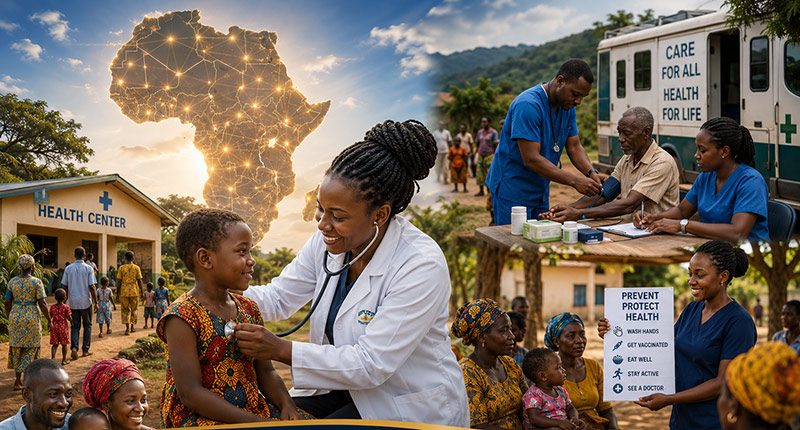
The Nigerian Diaspora Health Impact Initiative 2026 is a powerful example. Nigerian medical professionals abroad are returning to conduct medical interventions across all six geopolitical zones of Nigeria, focusing on specialist services, maternal and neonatal health, sickle cell screening, and health systems strengthening . This is not charity—it is structured, sustainable collaboration that leverages global expertise to strengthen local systems.
In Berlin, Cameroonian doctors from across Europe gathered to discuss the role of the medical diaspora in Cameroon’s healthcare system, highlighting successful initiatives like the recent implantation of a heart valve in Douala performed by specialists based in Germany . These efforts demonstrate how skills transfer and cross-border partnerships can bring life-saving care to underserved communities.
In France, the Senegalese diaspora founded SenHandiCare to support children with disabilities in Touba, providing tailored medical follow-up, rehabilitation sessions, and essential equipment free of charge . The project also trains caregivers and runs community awareness sessions to challenge the stigma associated with disability .
In India, the Indian-American diaspora mobilized during the COVID-19 crisis, providing telehealth services, advocating for vaccine donations, and influencing policy decisions . Their efforts demonstrated the transformative potential of diaspora diplomacy in global health emergencies.
The Health Challenges We Face
Diaspora communities face distinct health challenges that require tailored responses.
Acculturation—the process of adapting to a new culture—can have significant health impacts. African immigrants in the United States, for example, often adopt less healthy dietary patterns, consuming more caloric-dense foods and fewer fruits and vegetables after migration, which may increase cancer risk . These lifestyle changes, combined with language barriers and lack of culturally relevant nutrition programs, create a perfect storm for chronic disease .
Multimorbidity patterns also differ between continental African populations and diaspora populations . In diaspora communities, cardiometabolic diseases more commonly occur alongside psychiatric conditions such as depression and post-traumatic stress disorder . This requires integrated approaches that address both physical and mental health.
Socioeconomic factors compound these challenges. In the Cape Verdean community, while primary care engagement is high—82.7% of hospitalized Cape Verdean adults had a community health center primary care provider—rates of specialist visits were lower, and emergency department use was higher . This suggests that while care continuity exists, structural barriers still hinder access to the right care at the right time .
What ONE DIASPORA Is Doing
At ONE DIASPORA, we recognize that healthcare access is a cross-cutting issue that touches every aspect of our mission:
-
Collaboration: We connect diaspora health professionals with organizations and communities in need of their expertise
-
Culture: We advocate for culturally responsive care that respects diverse backgrounds and traditions
-
Education: We share knowledge about health literacy, prevention, and navigating healthcare systems
-
Advocacy: We push for inclusive health policies and more equitable research that includes diaspora populations
-
Mentorship: We support the next generation of diaspora health professionals
-
Economic Empowerment: We recognize that health is foundational to economic participation and productivity
A Call to Action
Healthcare access is not just about individual well-being—it is about collective strength. When our communities are healthy, they are more productive, more resilient, and more able to contribute to the societies they call home.
But we cannot achieve health equity alone. It requires systemic change. It requires research that includes us, policies that serve us, and systems that respect us.
At ONE DIASPORA, we are committed to being part of the solution. We are connecting diaspora health professionals with communities in need. We are advocating for inclusive policies. We are building partnerships that bridge borders.
Join ONE DIASPORA.
Because healthcare is a right, not a privilege.
And together, we can build a healthier future for everyone.